
What is Power State S0–S5?
Quick note explaining Power State S0–S5 for BIOS/UEFI and embedded firmware readers.
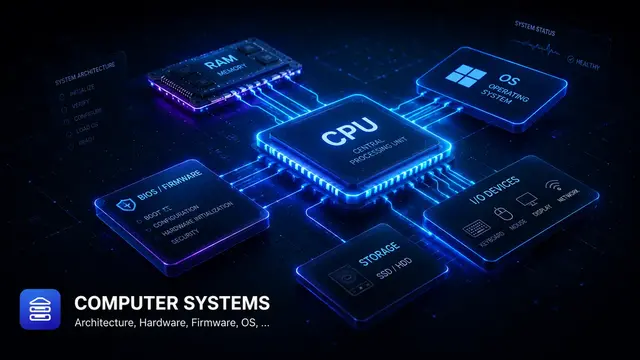
What is Power State S0–S5?
S0–S5 are ACPI system power states, from fully working (S0) to soft-off (S5).
Why it matters
- Describes how firmware exposes hardware behavior to the OS.
- Helps connect schematic-level signals with OS-visible devices.
- Useful for debugging boot, power, and device-enumeration issues.
Practical example
Example: when a device is visible in firmware but not in the OS, compare ACPI namespace output, OS logs, and the resources returned by _CRS.
Quick checklist
- Which phase is the last confirmed point in the log?
- Is there enough context around the failure?
- Can UEFI Shell output confirm the same state?
Quick takeaway
Power State S0–S5 is the contract between firmware description and OS interpretation.
Related notes
- ACPI Table Types: key points
- What is ACPI Namespace?
- What is AML?
- What is ACPI Method?
- What is USB Initialization in DXE?
Public references
Found this useful?
Save it or share it with someone learning firmware, BIOS/UEFI, and embedded systems.
Nội dung liên quan
Một số bài viết, ghi chú hoặc project có liên quan đến nội dung bạn vừa đọc.
ACPI Table Types: key points
Quick note explaining ACPI Table Types for BIOS/UEFI and embedded firmware readers.
What is ACPI Method?
Quick note explaining ACPI Method for BIOS/UEFI and embedded firmware readers.
How are DSDT vs SSDT different?
Quick note explaining DSDT vs SSDT for BIOS/UEFI and embedded firmware readers.
Biến note thành bài viết hoàn chỉnh
Notes là nơi ghi nhanh khái niệm.